About Banff
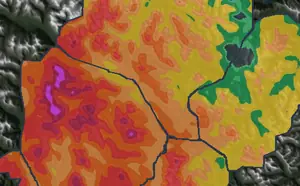
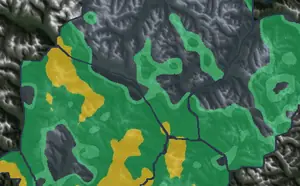
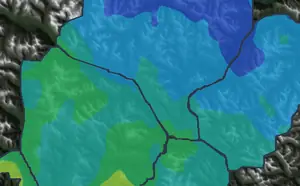
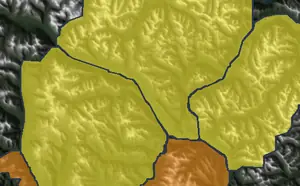
This page shows the current backcountry snow report, avalanche forecast, and weather conditions for Banff. Check the danger rating, field observations, and Doctor's Orders summary above before heading out.
The Banff region encompasses the mountain terrain surrounding Banff townsite in the heart of Banff National Park, with Mount Norquay as the primary lift-accessed anchor and the flanks of Cascade Mountain, Mount Rundle, and Sulphur Mountain defining the surrounding backcountry envelope. This area sits at the convergence of the Bow Valley and the steep eastern ramparts of the Main Ranges, where the transition from valley floor to alpine is abrupt and heavily featured with cliff bands, couloirs, and wind-loaded ridgelines. Access is concentrated along Highway 1 and the Norquay Road, placing this region within one of the most accessible mountain towns in the Canadian Rockies.
The snow climate here is firmly continental, shaped by the rain-shadow effect of the Main Ranges to the west and the cold, dry air masses that dominate the Alberta interior. Snowfall is consistent but moderate in volume compared to regions further west, resulting in a snowpack that remains cold and facet-prone through mid-winter. Wind exposure on higher elevations is significant and persistent slab development on lee aspects is a defining characteristic of the hazard profile throughout the season.
Terrain within this zone includes: Mount Norquay, Cascade Mountain, Mount Rundle, Sulphur Mountain, Banff National Park, Bow Valley.